
/** * Theme functions and definitions * * @package HelloElementor */ if ( ! defined( 'ABSPATH' ) ) { exit; // Exit if accessed directly. } define( 'HELLO_ELEMENTOR_VERSION', '3.4.4' ); define( 'EHP_THEME_SLUG', 'hello-elementor' ); define( 'HELLO_THEME_PATH', get_template_directory() ); define( 'HELLO_THEME_URL', get_template_directory_uri() ); define( 'HELLO_THEME_ASSETS_PATH', HELLO_THEME_PATH . '/assets/' ); define( 'HELLO_THEME_ASSETS_URL', HELLO_THEME_URL . '/assets/' ); define( 'HELLO_THEME_SCRIPTS_PATH', HELLO_THEME_ASSETS_PATH . 'js/' ); define( 'HELLO_THEME_SCRIPTS_URL', HELLO_THEME_ASSETS_URL . 'js/' ); define( 'HELLO_THEME_STYLE_PATH', HELLO_THEME_ASSETS_PATH . 'css/' ); define( 'HELLO_THEME_STYLE_URL', HELLO_THEME_ASSETS_URL . 'css/' ); define( 'HELLO_THEME_IMAGES_PATH', HELLO_THEME_ASSETS_PATH . 'images/' ); define( 'HELLO_THEME_IMAGES_URL', HELLO_THEME_ASSETS_URL . 'images/' ); if ( ! isset( $content_width ) ) { $content_width = 800; // Pixels. } if ( ! function_exists( 'hello_elementor_setup' ) ) { /** * Set up theme support. * * @return void */ function hello_elementor_setup() { if ( is_admin() ) { hello_maybe_update_theme_version_in_db(); } if ( apply_filters( 'hello_elementor_register_menus', true ) ) { register_nav_menus( [ 'menu-1' => esc_html__( 'Header', 'hello-elementor' ) ] ); register_nav_menus( [ 'menu-2' => esc_html__( 'Footer', 'hello-elementor' ) ] ); } if ( apply_filters( 'hello_elementor_post_type_support', true ) ) { add_post_type_support( 'page', 'excerpt' ); } if ( apply_filters( 'hello_elementor_add_theme_support', true ) ) { add_theme_support( 'post-thumbnails' ); add_theme_support( 'automatic-feed-links' ); add_theme_support( 'title-tag' ); add_theme_support( 'html5', [ 'search-form', 'comment-form', 'comment-list', 'gallery', 'caption', 'script', 'style', 'navigation-widgets', ] ); add_theme_support( 'custom-logo', [ 'height' => 100, 'width' => 350, 'flex-height' => true, 'flex-width' => true, ] ); add_theme_support( 'align-wide' ); add_theme_support( 'responsive-embeds' ); /* * Editor Styles */ add_theme_support( 'editor-styles' ); add_editor_style( 'editor-styles.css' ); /* * WooCommerce. */ if ( apply_filters( 'hello_elementor_add_woocommerce_support', true ) ) { // WooCommerce in general. add_theme_support( 'woocommerce' ); // Enabling WooCommerce product gallery features (are off by default since WC 3.0.0). // zoom. add_theme_support( 'wc-product-gallery-zoom' ); // lightbox. add_theme_support( 'wc-product-gallery-lightbox' ); // swipe. add_theme_support( 'wc-product-gallery-slider' ); } } } } add_action( 'after_setup_theme', 'hello_elementor_setup' ); function hello_maybe_update_theme_version_in_db() { $theme_version_option_name = 'hello_theme_version'; // The theme version saved in the database. $hello_theme_db_version = get_option( $theme_version_option_name ); // If the 'hello_theme_version' option does not exist in the DB, or the version needs to be updated, do the update. if ( ! $hello_theme_db_version || version_compare( $hello_theme_db_version, HELLO_ELEMENTOR_VERSION, '<' ) ) { update_option( $theme_version_option_name, HELLO_ELEMENTOR_VERSION ); } } if ( ! function_exists( 'hello_elementor_display_header_footer' ) ) { /** * Check whether to display header footer. * * @return bool */ function hello_elementor_display_header_footer() { $hello_elementor_header_footer = true; return apply_filters( 'hello_elementor_header_footer', $hello_elementor_header_footer ); } } if ( ! function_exists( 'hello_elementor_scripts_styles' ) ) { /** * Theme Scripts & Styles. * * @return void */ function hello_elementor_scripts_styles() { if ( apply_filters( 'hello_elementor_enqueue_style', true ) ) { wp_enqueue_style( 'hello-elementor', HELLO_THEME_STYLE_URL . 'reset.css', [], HELLO_ELEMENTOR_VERSION ); } if ( apply_filters( 'hello_elementor_enqueue_theme_style', true ) ) { wp_enqueue_style( 'hello-elementor-theme-style', HELLO_THEME_STYLE_URL . 'theme.css', [], HELLO_ELEMENTOR_VERSION ); } if ( hello_elementor_display_header_footer() ) { wp_enqueue_style( 'hello-elementor-header-footer', HELLO_THEME_STYLE_URL . 'header-footer.css', [], HELLO_ELEMENTOR_VERSION ); } } } add_action( 'wp_enqueue_scripts', 'hello_elementor_scripts_styles' ); if ( ! function_exists( 'hello_elementor_register_elementor_locations' ) ) { /** * Register Elementor Locations. * * @param ElementorPro\Modules\ThemeBuilder\Classes\Locations_Manager $elementor_theme_manager theme manager. * * @return void */ function hello_elementor_register_elementor_locations( $elementor_theme_manager ) { if ( apply_filters( 'hello_elementor_register_elementor_locations', true ) ) { $elementor_theme_manager->register_all_core_location(); } } } add_action( 'elementor/theme/register_locations', 'hello_elementor_register_elementor_locations' ); if ( ! function_exists( 'hello_elementor_content_width' ) ) { /** * Set default content width. * * @return void */ function hello_elementor_content_width() { $GLOBALS['content_width'] = apply_filters( 'hello_elementor_content_width', 800 ); } } add_action( 'after_setup_theme', 'hello_elementor_content_width', 0 ); if ( ! function_exists( 'hello_elementor_add_description_meta_tag' ) ) { /** * Add description meta tag with excerpt text. * * @return void */ function hello_elementor_add_description_meta_tag() { if ( ! apply_filters( 'hello_elementor_description_meta_tag', true ) ) { return; } if ( ! is_singular() ) { return; } $post = get_queried_object(); if ( empty( $post->post_excerpt ) ) { return; } echo '' . "\n"; } } add_action( 'wp_head', 'hello_elementor_add_description_meta_tag' ); // Settings page require get_template_directory() . '/includes/settings-functions.php'; // Header & footer styling option, inside Elementor require get_template_directory() . '/includes/elementor-functions.php'; if ( ! function_exists( 'hello_elementor_customizer' ) ) { // Customizer controls function hello_elementor_customizer() { if ( ! is_customize_preview() ) { return; } if ( ! hello_elementor_display_header_footer() ) { return; } require get_template_directory() . '/includes/customizer-functions.php'; } } add_action( 'init', 'hello_elementor_customizer' ); if ( ! function_exists( 'hello_elementor_check_hide_title' ) ) { /** * Check whether to display the page title. * * @param bool $val default value. * * @return bool */ function hello_elementor_check_hide_title( $val ) { if ( defined( 'ELEMENTOR_VERSION' ) ) { $current_doc = Elementor\Plugin::instance()->documents->get( get_the_ID() ); if ( $current_doc && 'yes' === $current_doc->get_settings( 'hide_title' ) ) { $val = false; } } return $val; } } add_filter( 'hello_elementor_page_title', 'hello_elementor_check_hide_title' ); /** * BC: * In v2.7.0 the theme removed the `hello_elementor_body_open()` from `header.php` replacing it with `wp_body_open()`. * The following code prevents fatal errors in child themes that still use this function. */ if ( ! function_exists( 'hello_elementor_body_open' ) ) { function hello_elementor_body_open() { wp_body_open(); } } require HELLO_THEME_PATH . '/theme.php'; HelloTheme\Theme::instance(); My Son’s Story: The Trauma of a Missed Diagnosis – Brilliant Minds Advocacy

My Son’s Story: The Trauma of a Missed Diagnosis

Posted: August 28, 2025 6:38 PM

When we talk about autism, the focus is typically on diagnosis and treatment. But what we don’t talk about enough is the silent trauma that comes before it. For many families, this is the painful period where a child’s early signs are overlooked and a parent’s concerns are dismissed, leaving them to struggle without the help they desperately need.

This painful reality is one I know all too well. Before my son’s diagnosis, I was constantly called to pick him up from daycare early. Each call was a heartbreaking reminder that my two-year-old wasn’t seen as a child in need of support, but as a “behavioral problem” the staff was relieved to send home.

Those calls did more than interrupt my workday. They chipped away at my confidence as a mother. I began to question myself, wondering if I was doing something wrong, if I wasn’t doing enough, or if I had failed him in some way. Instead of being offered strategies, resources, or even compassion, I was met with judgment and thinly veiled relief when I walked through the door. Over time, I began to associate the sound of my phone ringing with dread, knowing it meant yet another reminder that my child didn’t belong.

When I turned to his pediatrician for help, hoping for answers, I was met with the same dismissal. Despite coming prepared with observations about his missed milestones, his struggles at daycare, and the patterns I was seeing at home, I was told, “Boys develop later than girls.” That single sentence erased everything I had shared and left me feeling unseen.

These experiences were not isolated, but they cut the deepest. I sought guidance from the very people and institutions designed to provide it, only to be met with rejection from his caregivers and dismissal from the medical professional I trusted most. The result was a crushing sense of helplessness and isolation as I painstakingly watched my child struggle, carrying the grief of not knowing how to help.

Still, my instincts never quieted. I knew my son needed understanding, not punishment; support, not rejection. And yet my voice was consistently minimized. I couldn’t help but wonder if it was because I was young, a first-time parent, or because of the color of my skin, or perhaps all three. What I did know was this: from the moment I became a mother, I was committed to fighting for him.

The silent trauma before a diagnosis, particularly one like autism, is a hidden wound that profoundly affects not only the child but the parent as well. It comes from constant invalidation from friends who say “they’ll grow out of it,” from family who blames poor parenting, and from medical professionals who brush off early signs. Without guidance or support, parents are left to stumble through a labyrinth of challenges alone.

After years of walking that difficult road, things finally began to shift when my son received an autism diagnosis. That diagnosis unlocked a framework for understanding him and, most importantly, gave us access to services that could support him. Alongside autism, I also learned about sensory processing disorder. Suddenly, so many of the pieces began to make sense. His struggles with loud noises, crowded spaces, and unpredictable routines weren’t “bad behavior.” They were his nervous system working overtime in a world that overwhelmed him.

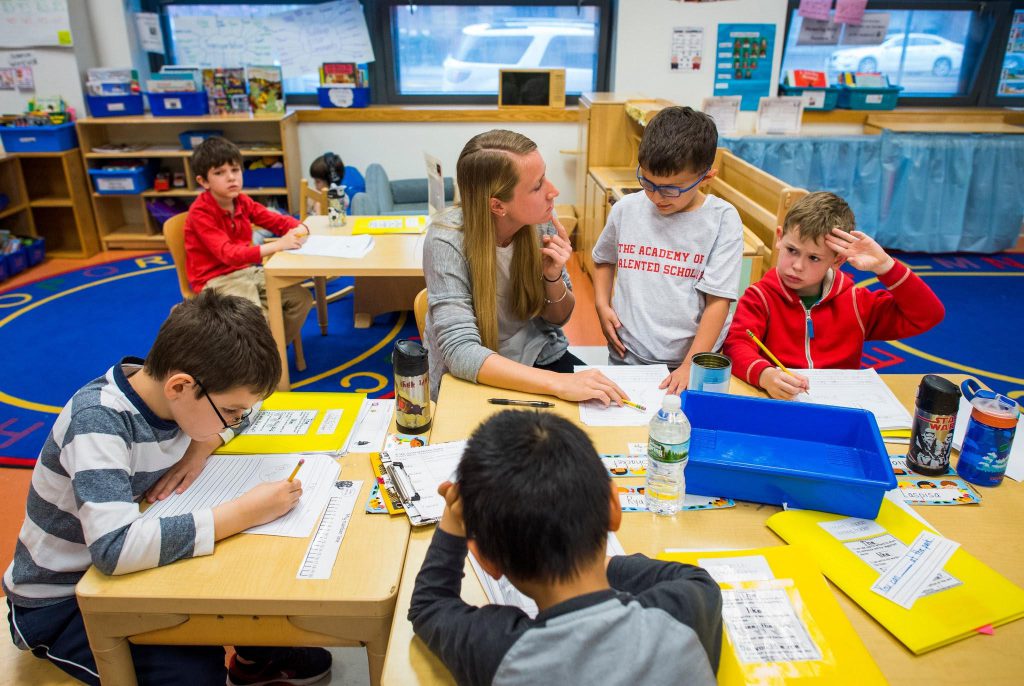
The classroom he was in only magnified those struggles, noisy, crowded, and unpredictable, with little opportunity for individual attention. For some children, this might have been background noise. For him, it was chaos. What he needed was calm, structure, and intentional engagement.

His diagnosis opened the door to an Individualized Education Program, which gave him access to occupational and speech therapy, a smaller classroom, and teachers trained to support neurodivergent students. Behaviors once mistaken for defiance were now understood in their proper context. For the first time, he was in an environment designed to meet his needs.

With my son finally receiving the tools he needed; I was also given something I had lost: validation. After years of feeling alienated and unheard, I finally had professionals who listened. The diagnosis confirmed what my instincts had always told me. I wasn’t overreacting. I wasn’t a bad mother. I was a mother who had known her child best all along, even when others refused to see it.

Beyond validation, I also gained community. Teachers, therapists, and support staff began walking this road with us instead of against us.

For children, the trauma of a missed or delayed diagnosis looks different but cuts just as deeply. Without understanding, they are left to grow up misunderstood, often labeled as “bad” or “defiant.” They are disciplined for behaviors tied directly to their autism, reinforcing the painful message that something is wrong with them.

By sharing my story, I’m not only recounting my son’s journey, I’m putting words to an experience many families live through in silence. The trauma of a missed diagnosis is real, and acknowledging it is the first step toward healing. It is also how we create change, ensuring that no parent is dismissed for trusting their instincts and no child is left without the support they deserve.

Every child deserves to be seen. Every parent deserves to be heard. If you are walking through this same uncertainty, I want you to know you are not alone. Trust your instincts, because no one knows your child like you do. And if you feel led, share your story too. Together, by raising our voices, we can build a community that validates parents, honors children, and pushes for the change families like ours need.

If you are looking for support, we are here for you. Contact us today to speak with an advocate who understands your journey and can help you get the resources, strategies, and guidance your family needs.

Resources for Parents

If you’re looking for more guidance or information, these trusted organizations provide education, advocacy, and support for families of children with developmental differences:

CDC – Learn the Signs. Act Early.
•  Autism Speaks – Early Signs and Symptoms
•  The Autism Society
•  Family Voices – Parent-led advocacy and support for families of children with special needs
Parent Training and Information Centers (by state)